HEPS ENERGY
HEPS technology guide

Blade fins

HEPS blade fins are surface features proposed for the pressure side of a wind turbine blade. They are an aerodynamic concept within the HEPS portfolio. Original design renders and animations explain the arrangement; wind-tunnel and electrical-output tests must establish whether it provides a useful net benefit.

Development overview · Reviewed

Original design reference
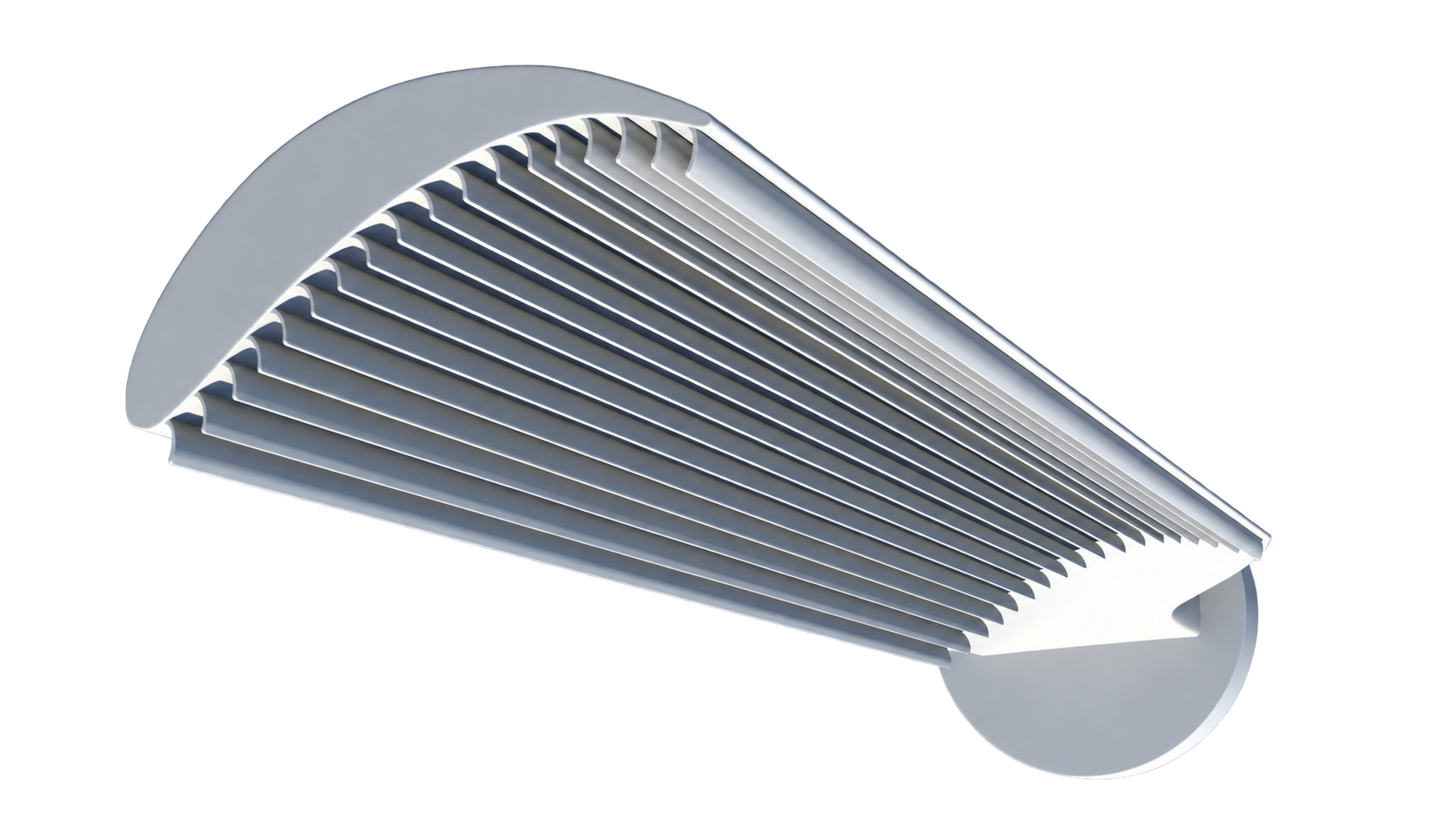
01 / Blade finsHEPS blade-fin design render · background removed for presentation
HEPS blade-fin design render · background removed for presentationOriginal ↗
HEPS / 01Original design record
Original design animation / 42 seconds

Follow the blade surface.

The original camera sequence moves from the rotor to the lengthwise fins along the blade pressure side.

Open blade-fin animation ↗
View the articulating-fin motion study 17 seconds

This earlier wireframe study shows the lower fin elements moving relative to the blade profile. It documents a design iteration.

Open fin motion study ↗

Original HEPS concept animations illustrate proposed mechanisms. They do not demonstrate power output or operating performance.

Aerodynamics at the surface

Blade fins

Multiple lengthwise fins on the blade pressure side are one embodiment within our modular blade patent family. The objective is to explore improved aerodynamic capture with a platform-specific retrofit product.

What we will establish

Tunnel and rotor comparisons, durable attachment, erosion and fatigue, and controlled full-scale net electrical output.

Development route

Retrofit development with wind owners, blade specialists and qualified service partners.

Examine the patent record →

Explore modular construction ↗

Questions about this concept

Are blade fins the same as modular blades?

No. Fins are surface features. Modular construction joins blade sections, while internal weights form a separate moving-mass system.

Has an aerodynamic gain been validated?

The animations illustrate a proposed airflow idea. They are not CFD results or measured lift, drag or electricity gains. Testing must establish performance across operating conditions.

The next phase / Join the work

Bring your expertise.
Build the next step.

Wind asset owners. Engineering and test teams.
Industrial investors. Development partners.

Start a conversation ↗

Open original file ↗