HEPS ENERGY
HEPS technology guide

Internal blade weights

The HEPS internal blade weight system proposes moving mass along guide rails inside a modular wind turbine blade. Repositioning the carriages changes the distribution of rotating mass. This architecture requires an HEPS rotating tower; any net electrical benefit must account for actuation energy, structural loads and losses.

Development overview · Reviewed

Original design reference
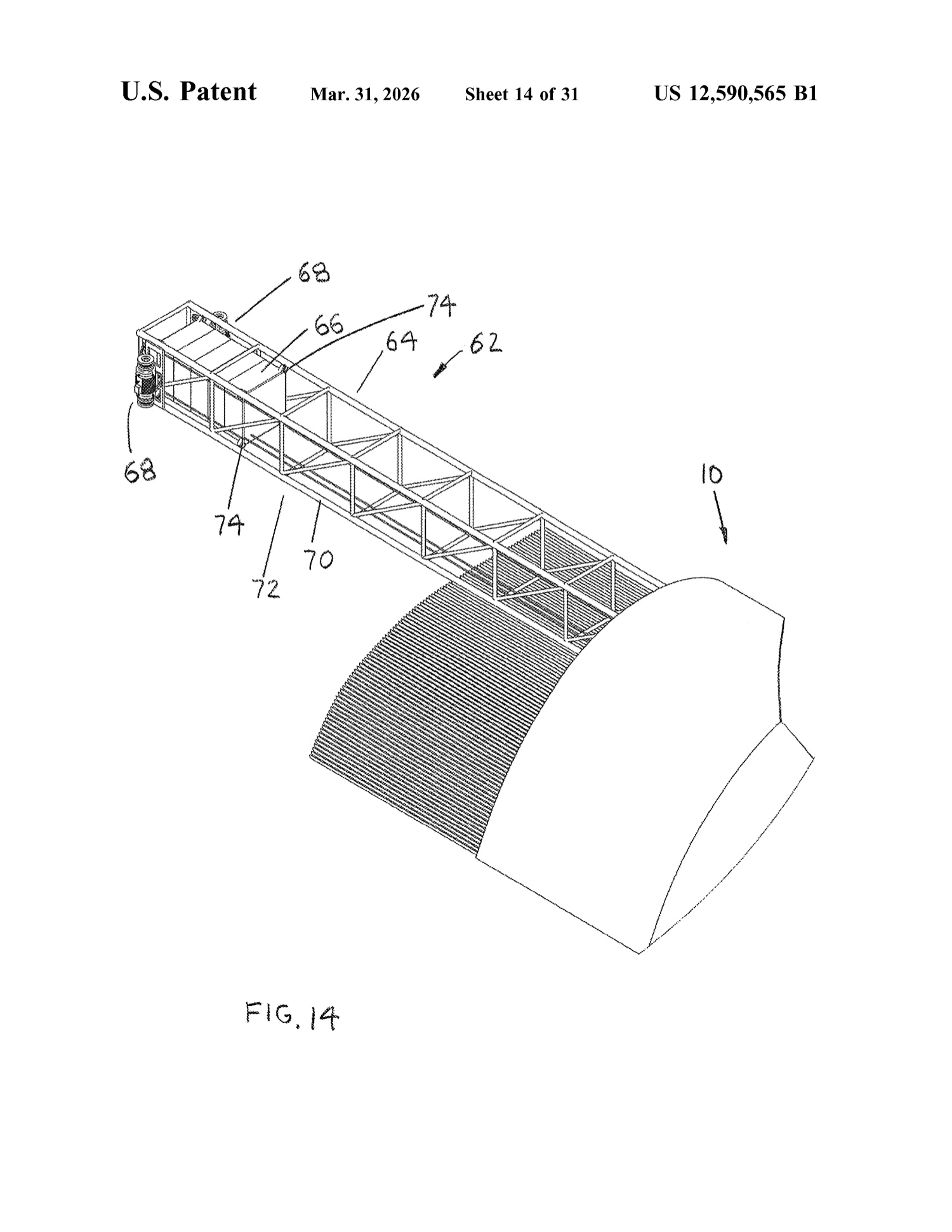
02 / Internal blade weight systemOriginal issued patent Fig.14: internal blade rail structure
Original issued patent Fig.14: internal blade rail structureOriginal ↗
HEPS / 02Original design record
Move mass. Measure the net effect.

Internal blade weight system

An internal frame, rail and drive arrangement changes the radial position of mass inside a modular blade. Our historical scale testing gives this work a starting point.

What we will establish

Actuator energy, complete energy balance, rotor balance, weight containment, loads and fatigue in a suitable carrier blade.

Development route

Joint development with a blade manufacturer and independent rotor test team.

Examine the patent record →

Inspect the 3D assembly ↗

Questions about this concept

What moves inside the blade?

Weight carriages travel along an internal rail frame. The model illustrates the cable, pulley and travel-stop arrangement and how the internal assembly shares the blade pitch joint.

Do the historical torque readings prove higher electrical output?

No. Reported peak torque in a small prototype is not a sustained electrical-output measurement. Matched testing and a complete energy balance are needed before claiming a net power improvement.

The next phase / Join the work

Bring your expertise.
Build the next step.

Wind asset owners. Engineering and test teams.
Industrial investors. Development partners.

Start a conversation ↗

Open original file ↗